When people think about a new roof, they usually focus on the shingles, tiles, or metal panels they can see from the ground.
But there is another layer underneath that plays a big role in how well the roof performs over time.
That layer is called underlayment.
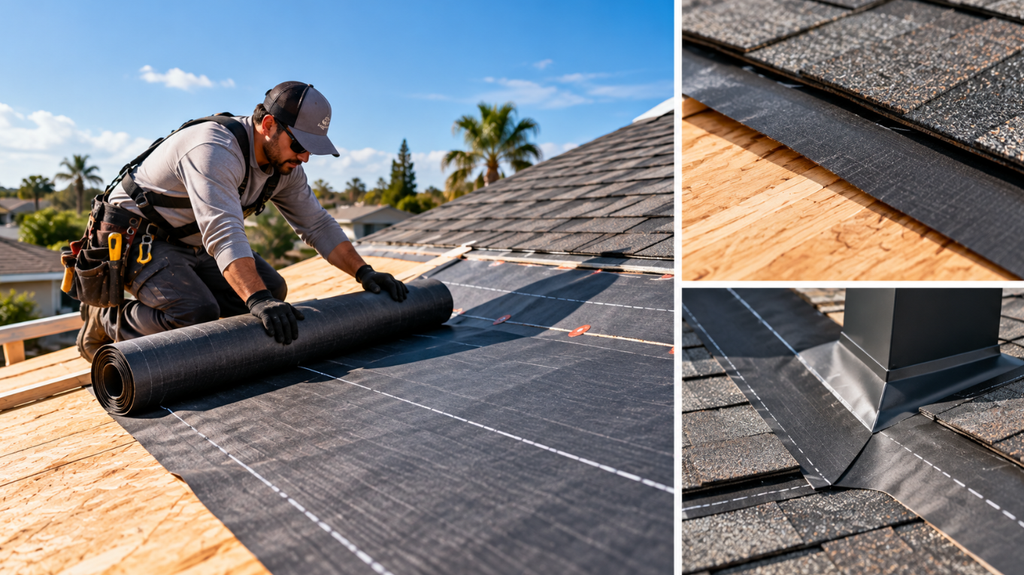
Roof underlayment sits between the roof deck and the outer roofing material. It acts as an added layer of protection against moisture, wind-driven rain, and other conditions that may reach beneath the finished roof surface.
Choosing the right underlayment can affect the durability of a new roof, especially in areas where heat, rain, and storms are common.
What Does Roof Underlayment Actually Do?
The main job of underlayment is to help protect the roof deck.
Roofing materials are designed to keep water out, but no roof surface is completely isolated from the weather. Rain can sometimes get beneath damaged shingles or enter around vulnerable areas such as valleys, vents, flashing, and roof edges.
Underlayment creates another barrier before moisture reaches the wood decking below.
That extra layer can be especially important during strong rain or while a roof is being repaired after surface damage.
Why Does Underlayment Material Matter?
Not all underlayment is made the same way.
Traditional felt underlayment has been used for many years. Synthetic underlayment is another common option. Some roof areas may also use self-adhering waterproof membranes where extra moisture protection is needed.
Each type has different characteristics.
Some materials may resist tearing better during installation. Others may handle moisture exposure differently. Weight, surface grip, weather resistance, and compatibility with the roofing material can also vary.
The right option depends on the roof system, local conditions, and installation requirements.
Can Better Underlayment Help a Roof Last Longer?
Underlayment does not determine roof lifespan by itself.
The outer roofing material, ventilation, flashing, drainage, installation quality, weather exposure, and maintenance all matter too.
Still, underlayment can help protect one of the most important parts of the roofing system: the roof deck.
If water reaches the decking repeatedly, the wood may begin to deteriorate. Moisture can also affect insulation and other materials below the roof.
A properly selected and installed underlayment gives the roofing system another level of defense.
That may help reduce the chances of moisture-related damage developing underneath the visible roof covering.
Why Is Moisture Protection So Important?
Water damage does not always become obvious immediately.
A small leak may stay hidden for a while before stains appear on a ceiling or wall. By that point, moisture may have already affected part of the roof deck.
Underlayment helps slow that process by providing a secondary moisture barrier.
This can be especially valuable when the exterior roofing material is temporarily damaged by wind, falling debris, or normal wear.
It is not a replacement for proper repairs. It is simply another protective layer that can help limit exposure.
Does Climate Affect Underlayment Choice?
Yes, local weather should be considered when choosing roofing materials.
Roofs exposed to heavy rain, high temperatures, strong winds, or frequent storms may face different conditions from roofs in cooler or drier climates.
Heat can also place stress on roofing materials over time.
The underlayment needs to work with the roof covering and remain suitable for the environment where it is installed.
That is why the cheapest option is not always the best choice for every property.
Installation Is Just as Important as the Material
Even a high-quality underlayment may not perform properly if it is installed incorrectly.
Wrinkles, tears, poorly sealed overlaps, or incorrect fastening can create weak spots.
Roof penetrations, valleys, and edges also need careful attention because water often finds its way into small openings.
A complete roofing system works best when each layer is installed correctly and designed to work with the others.
Think Beyond the Visible Roof Surface
A new roof is more than the material people see from the street.
The underlayment, decking, flashing, ventilation, and other hidden components all contribute to how the roof performs.
Choosing appropriate underlayment may not be the most exciting part of a roof replacement, but it can have a real effect on moisture protection and long-term durability.
When planning a new roof, it is worth asking what type of underlayment will be used and why it fits the roofing system.
Sometimes the layers nobody sees are the ones doing some of the most important work.
This post was written by a professional at Roof Masters Roofing & Restoration. As a trusted Roofing Company in Missouri City TX, Roof Masters Roofing & Restoration provides full-service roofing solutions for residential and commercial properties. Services include roof repair, complete roof replacement, new roof installation, flat roofing systems, emergency repairs, roof inspections, preventive maintenance, and storm damage assessments. The team serves customers throughout Sugar Land, Fort Bend County, and nearby communities within a 30-mile radius. With experienced roofing professionals, reliable service, and practical guidance, the company helps property owners choose roofing solutions focused on quality, value, durability, and long-term performance.